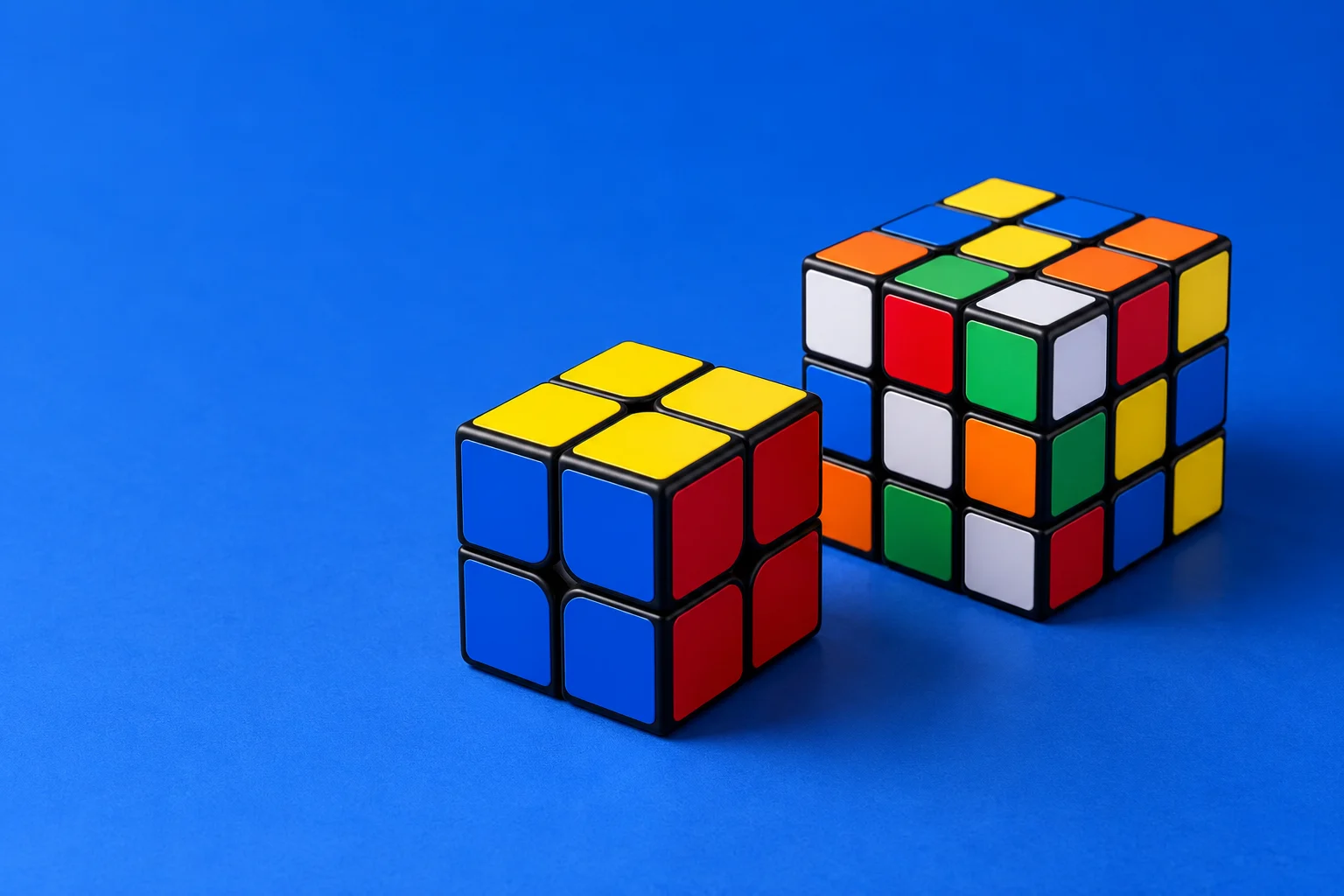
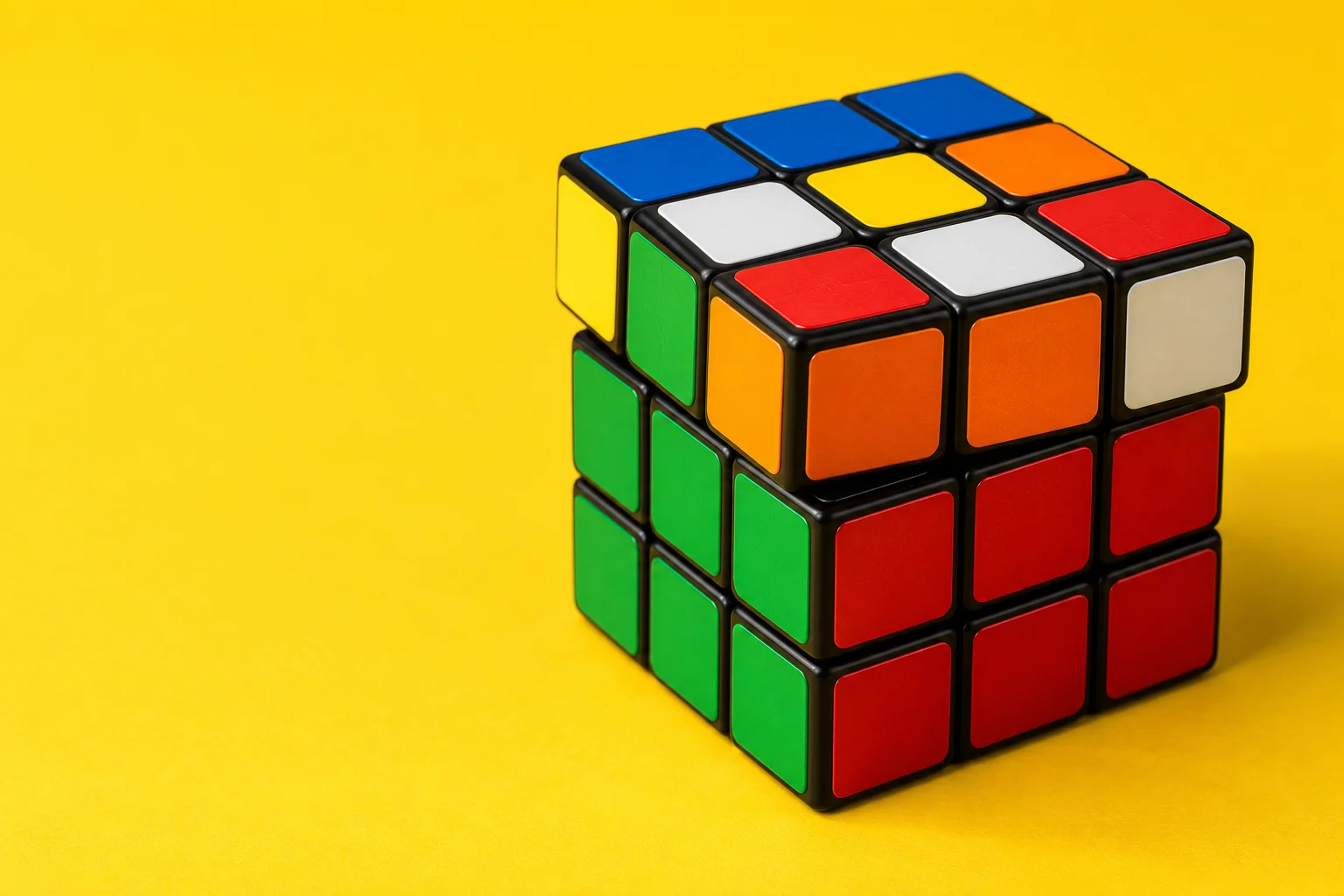
Reducing pauses helps you solve faster than turning as quickly as possible. A beginner who turns steadily and recognises the next piece early will usually improve more reliably than a solver who rushes into the next move and has to stop to recover. This guide gives you a short practice routine you can repeat with a physical cube or the Digital Cube.
Build a reliable baseline first
Use the same beginner method for a few sessions so that you can tell whether a change actually helps. Start a session with the cube timer and record the solve, scramble, and any pause that felt unusually long. You do not need an account or a leaderboard; a local history is enough to reveal patterns in your own practice.
Before timing, make sure you can execute the basic face turns without changing the cube’s orientation by accident. The notation reference covers U, D, L, R, F, and B, as well as prime and double turns. Accuracy is the foundation for speed.
Improve inspection and planning
Use the inspection period to find the pieces for your first step and decide where your first pair or corner will go. Do not try to plan an entire solve immediately. A useful first target is the white cross: trace each white edge, notice its other colour, and picture where it belongs relative to the centre pieces.
As you finish one step, you should already be looking for the next piece. This habit is called lookahead. Practise slowly, turning at a pace that lets you keep looking. If you lose track, stop turning, identify the next piece and carry on. Aim to spend less time paused over several sessions.
Learn a small set of algorithms well
Algorithms are easier to use when you know which pieces they leave undisturbed. Start with the short insertions in our algorithms hub and learn the notation before adding more cases. Repeat one sequence until you can perform it without checking a reference, then practise recognising the case from different angles.
Review one problem at a time
After a session, identify what slowed you down most: inspection, finding a corner, carrying out a sequence or correcting an error. Work on that one issue for ten minutes. A short, focused practice session is easier to assess than changing your method after every solve.
Speed should make solving more enjoyable, not more stressful. Keep a comfortable turning pace, reset when the cube state becomes uncertain, and use the timer’s penalty controls to record honest results.