3×3 beginner guide
How to solve a Rubik’s Cube
Solve your cube layer by layer in seven steps. Follow the moves and check your progress as you go.
Before you start
Get to know your cube
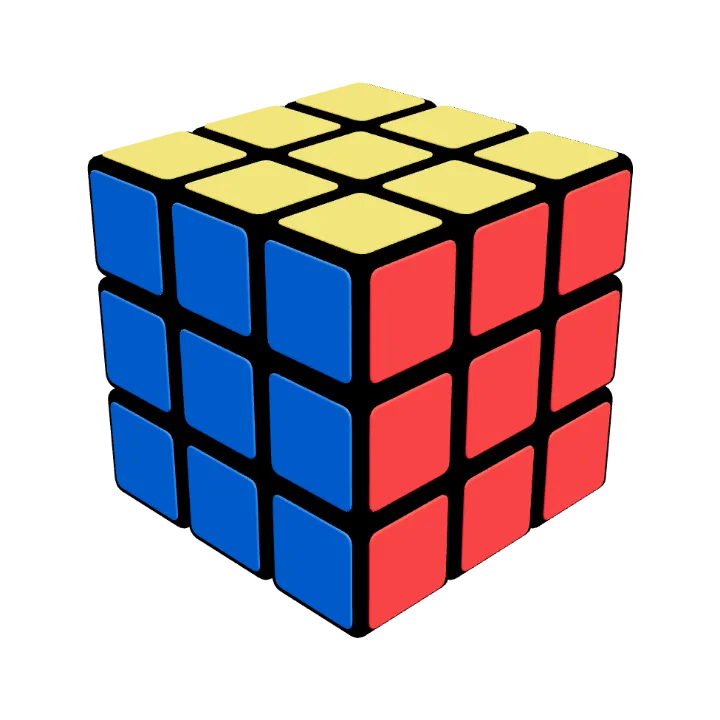
A 3×3 has six centres, twelve edges with two colours, and eight corners with three colours. Each centre tells you the colour of that face.
Explore Cube FoundationsRead the moves
A letter tells you which face to turn clockwise as you look at it. A prime mark (′) reverses the turn and 2 means a half turn.
Seven steps to solve your 3×3
1First layer
Turn the daisy into a white crossMake the white cross
Keep yellow on top. Make a daisy with four white edges around the yellow centre.
Turn the top until a white edge’s side colour matches its centre. Turn that side twice to send the edge down. Repeat for all four edges.
CheckpointThere’s a white cross on the bottom, and each edge matches its side centre.
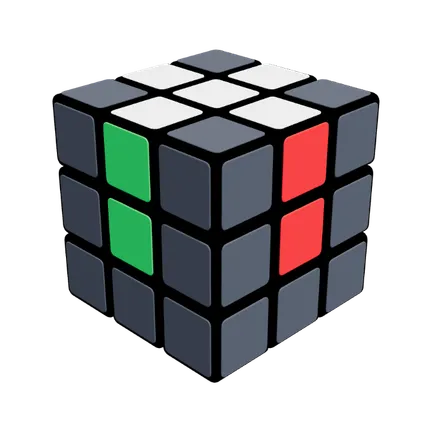
An aligned white cross 2First layer
Finish the white layerPlace the white corners
Keep white down. Find the slot that matches the corner’s three colours. Hold it at bottom-front-right and turn the top to bring the corner above it.
R U R' U'Repeat until the corner is in place. Use the same moves to lift a misplaced corner from bottom-front-right.
CheckpointThe bottom is white, and each side’s bottom row matches its centre.
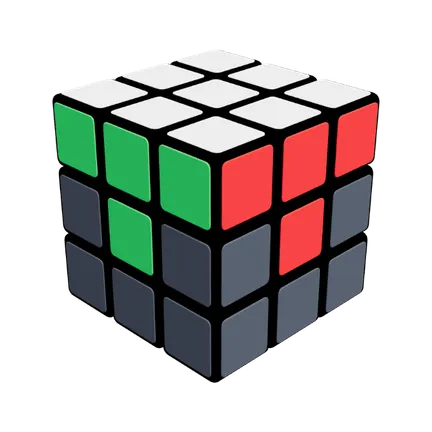
First layer solved 3Middle layer
Solve the middle edgesSolve the middle-layer edges
Keep white down. Find a top edge without yellow and match its side colour to the front centre. Use its other colour to choose left or right.
RightU R U' R' U' F' U FLeftU' L' U L U F U' F'If the edge you need is stuck in the middle, use the moves for that slot to bring it to the top.
CheckpointThe bottom two rows on each side match its centre.
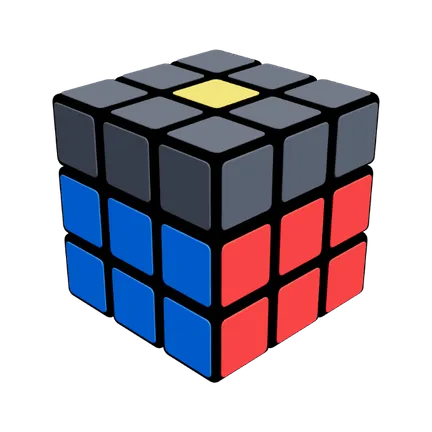
First two layers solved 4Last layer
Make the yellow crossMake the yellow cross
Keep yellow on top. Hold a yellow line left to right, or an L with its yellow edges at the back and left.
F R U R' U' F'If there’s no cross, do the sequence once. Check the new shape and set up again before repeating.
CheckpointAll four yellow edges face up. The side colours can still be mixed.
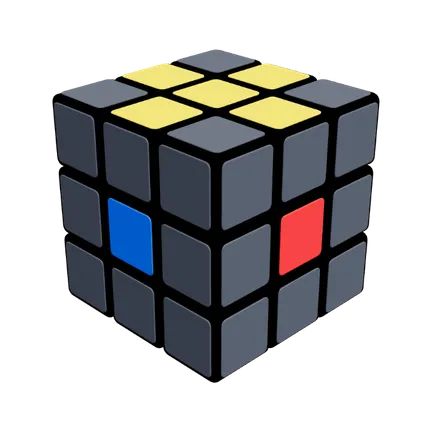
A yellow cross on top 5Last layer
Turn the yellow corners upwardTurn the yellow corners upward
Put a corner that needs turning at top-front-right. Repeat all four moves until its yellow sticker faces up.
R' D' R DTurn only the top layer to bring the next corner into position. The lower layers will be restored after the last corner.
CheckpointThe top is all yellow, and the bottom two layers are restored.
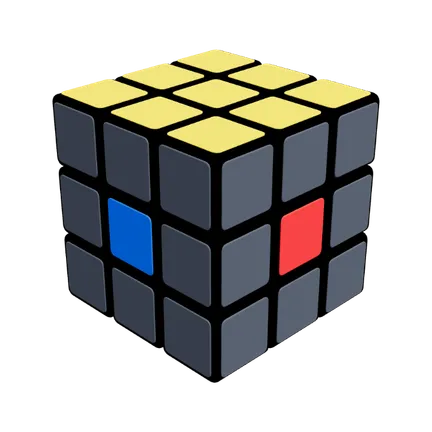
Yellow face oriented 6Last layer
Put the yellow corners in placePlace the last-layer corners
Find two matching top corners on one side. Turn the top to match the pair to its centre. If other corners still need moving, turn the whole cube to put the pair on the left.
R U R' U' R' F R2 U' R' U' R U R' F'If there’s no matching pair, do the sequence once to make one. Then line it up on the left and repeat.
CheckpointBoth top corners on each side match its centre.
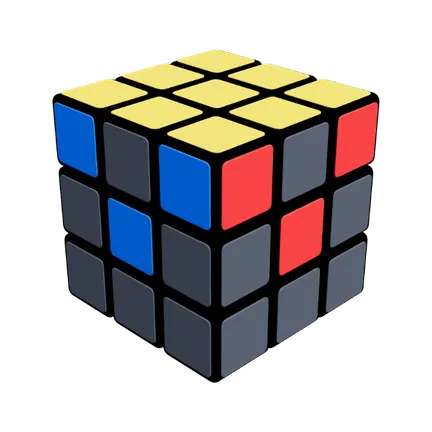
Yellow corners in place 7Last layer
Solve the final yellow edgesPlace the final edges
Keep yellow up. If one side is solved, turn the whole cube to put it at the back.
R U' R U R U R U' R' U' R2If no side is solved, do the sequence once and put the solved side at the back. Repeat as needed, keeping that side at the back.
CheckpointEach of the six faces is a single colour.
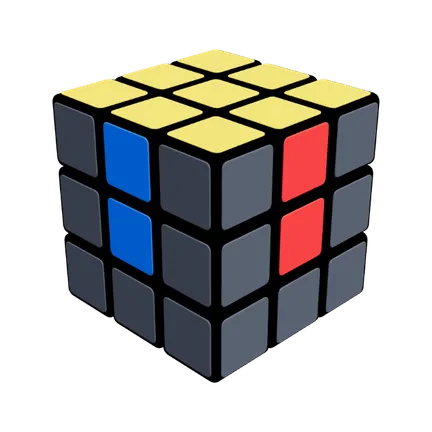
All six faces solved
Stuck on a step?
Revisit your last completed checkpoint and check how you’re holding the cube. If you’re still stuck, the solver can give you moves for your current scramble.
Learning to solve a cube
How long does it take to learn?
Go one step at a time. Repeat each step until you can recognize when to use it and what your cube should look like afterward.
Do I need to memorize all the moves first?
Keep the instructions beside your cube. Learn one sequence and practise it before adding the next.
Can I use the solver to learn this method?
Use the beginner course to learn this method. If you need moves for your current scramble, enter your cube’s colours in the solver for a personalized solution.